How Is Salvage Value Calculated for Junk Cars?
If you have an old, wrecked, or non-running vehicle sitting in your driveway, you may be wondering what it is actually worth. The answer is not always obvious. Salvage value — the amount a junk car buyer is willing to pay for your vehicle — is not a random number pulled out of thin air. It is based on several real, measurable factors.
Understanding how salvage value is calculated for junk cars can help you set realistic expectations, avoid getting lowballed, and walk away with the best possible offer. At PGH Junk Cars, we use a straightforward valuation process to make sure you get paid fairly for your vehicle, every time.
Whether your car stopped running last week or has been rusting in the yard for years, this guide breaks down exactly what goes into that number — in plain, simple terms.
What Does Salvage Value Actually Mean?
Salvage value is the estimated worth of a vehicle that can no longer be driven or repaired cost-effectively. Instead of being sold as a used car, it is sold for its parts, its scrap metal, or both. Junk car buyers, salvage yards, and auto recyclers use this figure to decide how much cash they will offer you.
It is important to understand that salvage value is not the same as the car’s original market value or even its trade-in value. A car worth $8,000 on the road might only be worth $400–$800 as scrap, depending on its condition and current scrap metal prices.
Two main components drive salvage value:
• Parts value: What usable components can be pulled and resold.
• Scrap metal value: The weight of the vehicle multiplied by current scrap metal prices.
In most cases, these two numbers are added together (minus the buyer’s operating costs) to arrive at your offer.
Key Factors That Determine Junk Car Valuation
Several specific factors affect how much your junk car is worth. Here is what every buyer looks at:
1. Year, Make, and Model
This is the starting point for any junk car valuation. Vehicles from popular brands — especially those with many cars on the road — tend to have higher parts demand. A 2012 Honda Civic or Ford F-150, for example, will almost always fetch a better offer than a rare foreign import, simply because the parts are in higher demand. Older vehicles from the 1980s or early 1990s may have lower parts value but could still hold decent scrap weight.
2. Current Scrap Metal Prices
A significant portion of what your junk car is worth comes down to raw steel. According to the USGS (United States Geological Survey), scrap iron and steel prices fluctuate based on national and global market conditions. When steel prices are high, your car’s base scrap value goes up. When they drop, buyers may offer less. A standard car weighs between 2,800 and 4,500 pounds — a significant amount of scrap metal that contributes heavily to the offer.
3. Vehicle Condition
The overall condition of your vehicle plays a major role in the final offer. Buyers look at:
• Does it run? Running cars almost always get higher offers because they are easier to tow and may still have working mechanical parts.
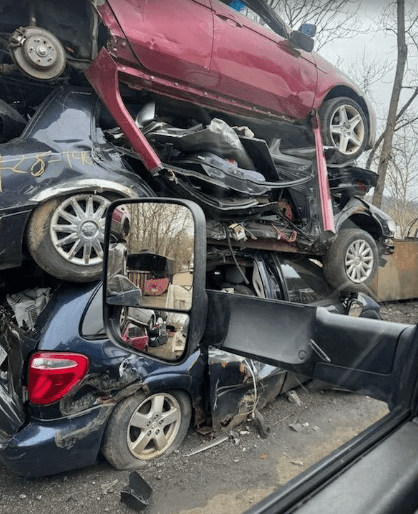
• Body damage: Major collision damage reduces the number of sellable parts.
• Interior condition: Seats, electronics, and dashboards in good shape add value.
• Missing parts: Catalytic converters, engines, and transmissions that have already been removed will lower your offer significantly.
Be honest about your car’s condition when requesting a quote. Accurate information leads to a more accurate offer — and no surprises at pickup.
4. Title Status
Having a clean, clear title in your name makes the transaction faster and may slightly increase your offer. Most junk car buyers, including PGH Junk Cars, will still purchase vehicles with a missing or salvage title, but the process may involve additional paperwork. In Pennsylvania, the Department of Transportation requires proper documentation to transfer ownership, so having your title ready is always recommended.
5. Location and Towing Distance
Where your car is located affects the final payout. If your vehicle is in an easily accessible driveway in Pittsburgh or the surrounding area, towing costs are minimal, which means more money in your pocket. Vehicles in remote locations, underground parking, or on rough terrain may result in a slightly adjusted offer to account for the added logistics.
6. Demand for Specific Parts
Certain parts of a car hold significant resale value on their own — sometimes more than the scrap metal itself. These include:
• Catalytic converters (especially on newer models)
• Engines and transmissions in working condition
• Airbags that have not deployed
• Doors, hoods, and body panels with minimal damage
• Electronics: infotainment systems, backup cameras, sensors
If your car has any of these intact, it can meaningfully increase your overall offer.
How Do Junk Car Buyers Actually Calculate the Offer?
Here is a simplified version of how buyers typically arrive at your offer:
• Step 1 — Gather vehicle info: Year, make, model, mileage, and condition.
• Step 2 — Check current scrap prices: Buyers look at live scrap metal rates in the local market.
• Step 3 — Assess parts demand: Based on the make and model, buyers estimate which components have resale value.
• Step 4 — Deduct operational costs: Towing, processing, and yard fees are factored in.
• Step 5 — Final offer: The buyer presents a cash offer based on the above.
At PGH Junk Cars, this process is transparent. We explain what is driving your offer and do not make you guess. **Our team provides honest, fair assessments based on real market data — not arbitrary numbers.**
Can You Increase the Salvage Value of Your Junk Car?
Yes, in some cases. Here are a few things you can do before calling a buyer:
• Leave parts in place: Do not remove the catalytic converter, battery, or tires before selling — these add to the offer.
• Gather your paperwork: Having the title and registration ready speeds up the process and can help you get a better deal.
• Get multiple quotes: Different buyers value cars differently. Comparing offers is smart.
• Be specific about condition: Accurate details lead to accurate quotes. Vague descriptions sometimes result in offers that are adjusted downward at pickup.
None of this requires you to spend money or make repairs. Junk car buyers purchase vehicles as-is. The goal is simply to give the buyer as much accurate information as possible upfront.
What Is a Realistic Salvage Value Range for Junk Cars?
This is the question most people really want answered. The honest answer is: it depends. However, here are some general ballpark ranges based on common scenarios:
• Non-running, high-mileage sedan (2000–2010): $150 – $400
• Running car with moderate damage: $400 – $800
• Truck or SUV in poor condition: $300 – $700
• Newer vehicle (post-2015) with intact parts: $600 – $1,500+
These are rough estimates. Actual offers vary based on current scrap prices, your specific vehicle, and your location. The only way to know your car’s true salvage value is to get a quote from a reputable buyer.
**Keep in mind: offers can change if scrap metal prices shift significantly, so it is generally a good idea to act on a quote within the timeframe the buyer specifies.**
Frequently Asked Questions
Does my car need to run to have salvage value?
No. Even completely non-running vehicles have scrap metal value and may have sellable parts. Most junk car buyers, including PGH Junk Cars, purchase cars regardless of whether they run.
How long does it take to get an offer?
At PGH Junk Cars, you can get a quote over the phone or online in minutes. Once you accept, we schedule a pickup time that works for you — often the same day or next day.
Do I need a title to sell my junk car in Pennsylvania?
Having a title makes the process faster and smoother. Pennsylvania requires documentation to transfer vehicle ownership. If you do not have a title, contact PGH Junk Cars to discuss your options before assuming you cannot sell.
Will the offer change when the tow truck arrives?
A reputable buyer will only adjust the offer if the vehicle’s condition is significantly different from what was described. This is why being upfront and accurate when requesting a quote matters. At PGH Junk Cars, we aim to honor the quote we give — no surprises.
Ready to Find Out What Your Junk Car Is Worth?
Now that you know how salvage value is calculated, you are in a better position to get a fair deal. The condition, make, model, scrap prices, and parts demand all play a role — and the best way to know your car’s exact value is to get a real quote. PGH Junk Cars makes it easy: call us, describe your vehicle, and we will give you an honest cash offer — with free towing included. Do not let that car sit and lose value. Contact PGH Junk Cars today and turn your junk car into cash.